
Daily Habits to Boost Efficiency
Chosen theme: Daily Habits to Boost Efficiency. Welcome to a friendly, practical space for building small, everyday routines that unlock steady momentum, reduce friction, and leave you proud of the work you finish. Subscribe and share your favorite efficiency ritual so we can learn together.
Morning Momentum: Start Small, Start Sure
The 10-Minute Map
Before opening messages, sketch your day in ten minutes: top three outcomes, one deep-work block, one quick win. A reader named Maya swears this tiny map saved her from reactive mornings and helped her finish a proposal by lunch. Try it tomorrow and tell us how it feels.
Light, Water, Move
Step into daylight, drink a full glass of water, and add a minute of gentle movement. This fast trio nudges your body toward alertness and calm focus. Share your favorite micro-movement—stretch, walk, or squats—and inspire others to stack healthier starts onto their mornings.
Claim the First Win
Choose a task that takes under five minutes and matters: naming the deliverable, filing the brief, or opening the draft. That early, meaningful checkbox energizes your brain for harder work. Comment with your go-to first win so we can build a shared library of ideas.

Time Blocking That Actually Sticks
One Deep-Work Block
Schedule a single ninety-minute deep-work block when you reliably feel sharp. Silence notifications, close extra tabs, and post a visible ‘focus’ note. Aaron, a developer, finished a month-long refactor in two weeks after guarding this daily window. Try it and share your results or roadblocks.


Sprints With Soft Edges
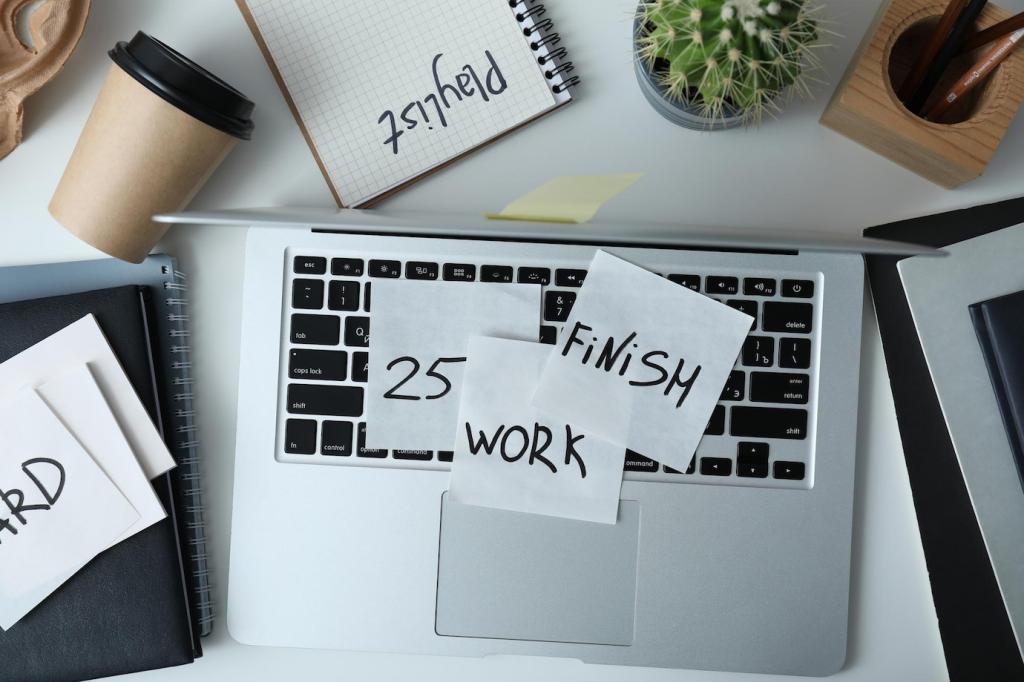
Use twenty-five minute sprints followed by short breaks, but add a buffer lap to write what’s next. This reduces restart friction dramatically. If a sprint derails, mark the interruption source. After three days, patterns emerge—then you can change your environment, not just your calendar.
Batch the Inbox
Check email two or three times daily on purpose, not constantly by reflex. Create filters for newsletters and a ‘Reply Today’ label for quick responses. One reader cut inbox time by forty percent in a week. Share your best filter setup so others can copy it and save hours.
Prune Notifications
Turn off non-critical alerts everywhere. Keep only calendar, calls, and personally tagged messages. Place distracting apps in a hidden folder. After a week, note your focus rating and compare. If it helps, invite a friend to prune with you—accountability makes these tiny switches stick.
Capture and Clear
Keep a universal capture spot: one note for ideas, one list for tasks. Empty both at day’s end. This habit prevents mental tab-hoarding and rescues scattered thoughts. Drop a comment with your favorite capture app or analog tool; we’ll compile community-tested options in our next post.
Energy Management Beats Time Management
Movement Snacks
Every hour, add two minutes of movement: stretch, stairs, or a brisk hallway lap. These resets clear cobwebs and improve mood more than another scrolling break. Emma, a nurse, says her afternoon charting sped up after adopting tiny walks. Try it and tell us which moves you enjoy.
Smart Fueling
Favor a protein-rich breakfast and steady hydration. If you drink coffee, test it sixty to ninety minutes after waking to avoid early jitters. Notice your focus curve for a week, then schedule harder tasks when you naturally peak. Share your observations to help others tune their day.
Breath as a Reset
Use a brief breathing pattern before important work: slow inhales, slower exhales, repeat for one minute. It reduces tension and centers attention without special gear. If you try it before a presentation or code review, report back; your story might encourage someone’s first calm start.
Design Your Environment to Do the Work for You
01
Clear your desk, pin tomorrow’s top three, and open the exact file you’ll start with. Maya cut her morning startup time by forty-five minutes using this habit. Photograph your reset setup and share it; seeing real examples helps everyone design a smoother launchpad for tomorrow.
02
Place a visual cue for your next habit—headphones on the keyboard, a sticky note with the target. Increase friction for distractions: remove social apps from the home screen, log out between sessions. What cue works best for you? Post it to spark ideas across the community.
03
Keep templates, checklists, and snippets at arm’s reach: proposal skeletons, email starters, SQL fragments. Starting from a scaffold saves minutes that add up. Share a template you love, and we’ll feature it with credit so others can adopt your time-saving building blocks.
Review, Reflect, and Adapt
Two-Minute Evening Audit
Each evening, list today’s wins, stuck points, and one adjustment. Then set tomorrow’s top three. This tiny review prevents drift and quiets mental clutter. If you skip a day, no guilt—restart the next. Share your favorite audit question so we can enrich the checklist together.
Weekly Systems Check
On a calm day, scan your calendar, commitments, and backlog. What created progress? What created drag? Adjust blocks, rules, or templates accordingly. Readers report that one consistent review prevents overcommitting. Tell us your weekly ritual and which small tweak moved the needle most.
Track Streaks, Not Perfection
Use a simple tracker for key habits, but allow slips. Aim for ‘never miss twice.’ Identity grows from patterns, not isolated days. If a streak breaks, log why and move on. Post your current streak and the habit behind it; public commitment can help you keep momentum.
Agenda Before Meeting
Send a brief agenda and desired outcome the day before. Our reader Diego cut meeting time by a quarter using this single habit. If there’s no agenda, propose an asynchronous update. Try it this week and report whether discussions felt sharper or shorter—we love real-world experiments.
Clarify in One Message
Use a quick template: context, question, options, deadline. This reduces back-and-forth and speeds decisions. Save it as a snippet for chats or email. Share your favorite clarity phrase or emoji cue; together we can build a light, shared language that keeps teams moving efficiently.
End With Next Step
Close every message or meeting with a clear owner, next action, and date. It takes ten seconds and avoids lost momentum. If you try this today, note how many threads end cleanly. Drop a comment about your results so others can see the impact of explicit handoffs.
Join our mailing list